






How Ready Is Your AI Governance for ISO/IEC 42001?

Benchmark your AI management system against ISO/IEC 42001 in about 15 minutes. Free, no sign-up, with an instant gap report and roadmap.
Claude Partner Network official services partner badgeOpenAI Advanced Partner badgeGoogle Cloud Partner badgeMicrosoft Solutions Partner badgeAWS Partner Network badgeNotion Solutions Partner badgeTikTok Marketing Partner badgeLinkedIn Marketing Partners badgeShopify Plus Partner badge
001
STANDARD

What ISO/IEC 42001 Is

The first international standard for AI management systems: the policies, roles, risk controls and evidence needed to build or use AI responsibly.
002
AUDIENCE

Who It's For

Built for organizations that create AI products or rely on AI in daily operations.
01
AI Providers & Builders
Teams that design, train or ship AI products and need evidence of responsible development.
02
AI Users & Adopters
Companies running AI in support, sales, operations or decisions that need clear oversight.
03
Regulated & Scaling Teams
Organizations facing audits, customer due diligence or rules such as the EU AI Act.
003
METHOD

How It Works

Three short parts and one instant report. About 15 minutes from start to finish.
1
Applicability Profile
Five quick questions on your AI role, size, sector, markets and existing management systems.
Clauses 4–10
22 questions on context, leadership, planning, support, operation, evaluation and improvement.
2
3
Annex A Controls
Up to 21 questions on AI control areas A.2 to A.10, tailored to your profile.
Instant Report
Your readiness score, gap list and roadmap appear on screen the moment you finish.
4
5
Expert Review
Optional: book a call and we turn your results into a practical implementation plan.
004
REPORT

What You Get

A clear picture of where your AI governance stands and what to do next.

Tailored Scope. Your AI role, sector and markets decide which requirements and controls matter most.
ISO/IEC 42001 assessment scope tailored to your AI role and sector

Plain-Language Questions. Every question explains the requirement in simple terms. No copy of the standard needed.
Plain-language ISO/IEC 42001 self-assessment questions

Readiness Score. See your maturity for each clause and Annex A area, plus an overall readiness level.
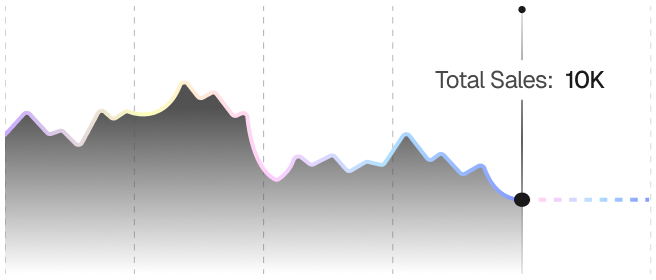
AI governance readiness score dashboard

Prioritized Gap List. Each gap ranked by impact, so your team knows exactly what to fix first.
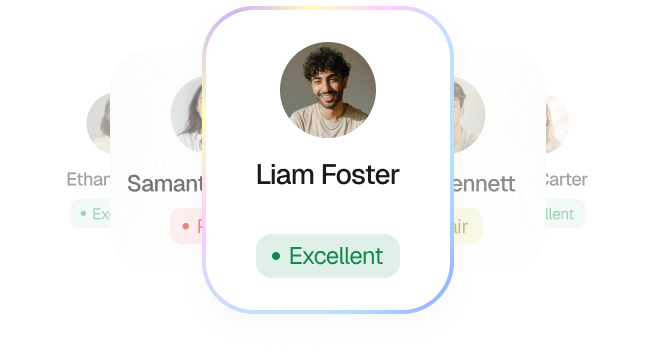
Prioritized list of ISO/IEC 42001 gaps ranked by impact

Action Roadmap. Practical next steps aligned with ISO/IEC 42001, 23894 and 42005 guidance.
AI management system roadmap with next steps
Data Always Protected
End-to-end encryption icon
End-to-End Encryption
Secure API integrations icon
Secure API Integrations
Role-based access control icon
Role-Based Control
Data minimization icon
Data Minimization
005
READINESS

Where Do You Stand?

Compare informal AI governance with a management system aligned to ISO/IEC 42001.
AI governance is informal and ad hoc
AT RISK
No one formally owns AI risk, policy or oversight.
AI systems in use are not inventoried or clearly scoped.
Risks are discussed case by case, never assessed or recorded.
Roles, competence and awareness around AI are undefined.
Performance is never monitored, audited or reviewed by leadership.

FIND MY GAPS

AI governance runs as a managed system
READY
Leadership sets an AI policy with clear roles and accountability.
AI systems, context and interested parties are documented in scope.
AI risks are assessed, treated and reviewed on a defined cycle.
People working with AI are trained, competent and aware of their duties.
Internal audits and management reviews drive continual improvement.

CHECK MY SCORE

AI controls exist on paper, if at all
AT RISK
Impacts on people and society are not assessed before deployment.
Data quality, provenance and preparation for AI are not documented.
The AI life cycle has no defined requirements, verification or release gates.
Users and affected parties get little information about how AI is used.
Third-party AI tools and suppliers are adopted without due diligence.

FIND MY GAPS

AI controls are defined, evidenced and owned
READY
AI system impact assessments are performed and kept up to date.
Data for AI is governed for quality, provenance and preparation.
Every life cycle stage, from design to retirement, follows documented controls.
Interested parties get clear information and a channel to report concerns.
Responsibilities with suppliers and customers are defined and agreed.

CHECK MY SCORE

006
TEAM

Who We Are

Strategy, architecture and AI governance specialists who help you act on your results.
Mario Bosquet
Tech Advisor
Bartolomé Pérez
Strategy Consultant
Mahfuj Sarker
Web Developer
Noman Saddiqi
SEO Specialist
Mohammad Labib
App Developer
007
GET STARTED

Plan Your ISO/IEC 42001 Path

Share your budget and preferred start date, and we’ll shape a readiness plan around them.

Fields marked * are required.

$10,000
When would you like to start? *

Rather talk now? Book a call

Request received

Thanks! A specialist will review your budget and timing, and reply by email with next steps.

Want to talk sooner? Book a 30-minute audit call.

Sorry, your request didn’t send. Please try again in a moment, or call one of the numbers in the footer.
008
FAQ GUIDE

What You Ask

Clear answers on the standard, the assessment and the path to certification.
1
What is ISO/IEC 42001?
2
Who should consider ISO/IEC 42001?
3
What does the gap assessment cover?
4
How long does it take, and is it really free?
5
Is this an official audit or certification?
6
What are Clauses 4–10?
7
What is Annex A?
8
How does ISO/IEC 42001 relate to the EU AI Act?
9
How do ISO/IEC 23894 and ISO/IEC 42005 fit in?
10
What happens after I get my report?

Disclaimer: this self-assessment is indicative and based on your own answers. It is not an audit, does not reproduce ISO/IEC standards and does not lead to certification, which only accredited certification bodies can grant. ISO/IEC 42001, ISO/IEC 23894 and ISO/IEC 42005 are referenced for alignment only.